
Every food you eat that provides energy is made up of some combination of three macronutrients: protein, carbohydrates, and fat. Understanding what each one actually does removes a lot of the confusion around nutrition advice that treats them as simply "good" or "bad."
Protein: the body's building material
Protein is made of amino acids, which the body uses to build and repair tissue — muscle, skin, hair, enzymes, and more. Unlike carbs and fat, protein's primary role isn't energy supply, though it can be used for energy if needed.
Common sources
Meat, poultry, fish, eggs, dairy, legumes (beans, lentils), tofu and other soy products, and to a lesser extent, grains and vegetables.
Why it gets special attention
Protein has a notably higher satiety effect per calorie compared to carbs or fat — meaning it tends to help people feel fuller for longer — and it's the primary nutrient supporting muscle maintenance and growth, which is why it's often emphasized alongside strength training (see our beginner's guide).
Carbohydrates: the body's preferred energy source
Carbohydrates break down into glucose, which is the body's primary and most readily available fuel source, especially for the brain and during higher-intensity exercise. Carbs are often unfairly lumped together as a single category, but there's a meaningful difference between types.
Common sources
Grains (rice, bread, pasta, oats), fruit, starchy vegetables (potatoes, corn), legumes, and added sugars.
Fiber: the carbohydrate worth understanding on its own
Fiber is technically a type of carbohydrate the body can't fully digest, which is exactly why it behaves so differently from other carbs — see our dedicated guide on why fiber matters more than you think.
Fat: energy storage, hormone support, and more
Dietary fat serves several roles: a concentrated energy source, supporting the absorption of certain vitamins (A, D, E, K), providing insulation and organ protection, and serving as a building block for hormones. Like carbs, fat isn't a single uniform category — the type matters significantly, covered in our guide on healthy vs. unhealthy fats.
Common sources
Oils, butter, nuts and seeds, avocado, fatty fish, and fat naturally present in meat and dairy.
Why "balance" gets recommended so often
Since each macronutrient serves a different, non-interchangeable role in the body, general nutrition guidance tends to favor including all three rather than heavily restricting any one of them long-term. Extremely low-carb, low-fat, or low-protein approaches can work for specific short-term goals under proper guidance, but each comes with trade-offs worth understanding rather than following blindly. Our guide on building a balanced plate offers a simple visual approach to including all three without needing to track exact numbers.
A note on precise targets
You may see specific macronutrient gram targets or ratios recommended online. These are genuinely useful for some people with specific training or health goals, but they're not universally necessary, and getting them right for your individual situation is best done with guidance from a registered dietitian rather than a generic online formula.
This article is educational and general in nature, not personalized nutrition advice.
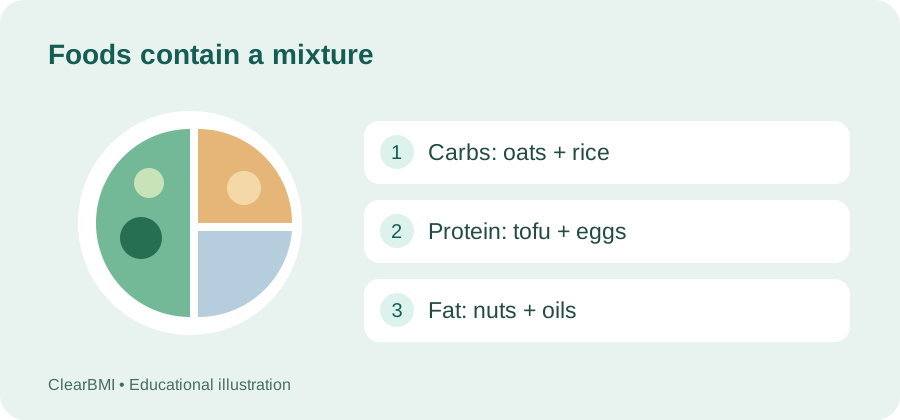
A food can belong to more than one column
A bean-and-rice bowl contains carbohydrate from both the rice and beans, protein from the beans, and fat if you cook with oil or add avocado. This overlap is normal. Food groups are useful planning shortcuts, not perfectly separate chemical categories. When planning lunch, ask whether the meal includes a protein food, a carbohydrate source and some produce before worrying about an exact ratio. People with specific clinical or athletic needs may benefit from individualized targets; an everyday meal does not need a spreadsheet to count as balanced.
Keep reading: