
Fiber tends to get overshadowed by protein in everyday nutrition conversations, but it plays a role that's genuinely hard to replace — and most people eat meaningfully less of it than commonly recommended.
What fiber actually is
Fiber is a type of carbohydrate the human body can't fully break down and absorb, which sounds like a downside but is actually the entire point. Because it moves through the digestive system largely intact, it has effects that fully digested carbohydrates simply don't.
Soluble vs. insoluble fiber
- Soluble fiber dissolves in water, forming a gel-like substance in the digestive tract. Found in oats, beans, apples, and citrus fruit. Associated with helping moderate blood sugar spikes and supporting healthy cholesterol levels.
- Insoluble fiber doesn't dissolve and adds bulk to stool, supporting regular digestion. Found in whole grains, nuts, and vegetable skins.
Most fiber-rich whole foods contain a mix of both types, so there's rarely a need to track them separately in everyday eating.
Why fiber supports fullness
Fiber adds bulk and slows digestion, which contributes to feeling fuller for longer after a meal compared to an equivalent amount of refined carbohydrate. This is one reason whole foods (an apple, for instance) tend to be more filling per calorie than their processed counterparts (apple juice, which has had virtually all its fiber removed).
The blood sugar connection
Because fiber slows the rate at which carbohydrates are digested and absorbed, fiber-rich meals generally produce a more gradual rise in blood sugar compared to refined, low-fiber versions of similar foods — one of the most consistently supported findings in nutrition research on fiber.
Digestive health
Fiber feeds beneficial gut bacteria and supports regular bowel movements, both increasingly recognized as relevant not just for digestive comfort but for broader immune and metabolic health, an active area of ongoing research.
How much fiber is generally recommended
General guidelines commonly cite roughly 25-30 grams per day for most adults, though individual needs vary. Most people in Western diets consume noticeably less than this on average, largely due to the prevalence of refined grains and processed foods with much of their natural fiber removed during processing.
Practical ways to increase fiber intake
- Choose whole fruit over fruit juice
- Swap refined grains (white bread, white rice) for whole-grain versions where practical
- Add beans or lentils to soups, salads, and grain bowls
- Leave skins on fruits and vegetables where appropriate (apples, potatoes, cucumbers)
- Snack on nuts, seeds, or whole fruit instead of refined snack foods
A word of caution on increasing fiber quickly
Ramping up fiber intake very suddenly can cause temporary digestive discomfort — bloating or gas — for some people. Increasing gradually over a couple of weeks, alongside adequate water intake (see our hydration guide), tends to be more comfortable than a sudden large jump.
Where fiber fits into the bigger picture
Fiber is one part of the balanced plate approach covered in our balanced plate guide — prioritizing whole, minimally processed carbohydrate sources naturally increases fiber intake without needing to track grams directly.
This article is educational and general in nature, not personalized dietary advice.
Make one swap at a time
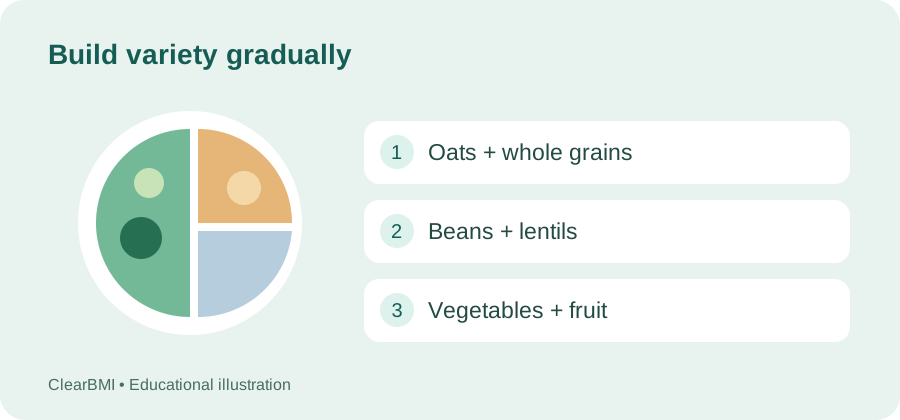
If breakfast is usually refined cereal, try replacing part of it with oats or another whole-grain option you enjoy. On a different day, add beans to soup or choose fruit with lunch. Introducing several changes at once makes it harder to identify what agrees with your digestion. Keep a short note of the change and any symptoms rather than forcing a target immediately. If you have a bowel condition, persistent pain or a prescribed low-fiber diet, discuss changes with your care team instead of following a general article.
Keep reading: