Hydration and weight management are related topics, but drinking more water is not a fat-loss treatment. The clearest practical distinction is between meeting fluid needs and changing the beverages you usually drink. Those are different decisions, and neither establishes a guaranteed weight outcome.
Replacing a drink changes what the meal contains
Plain water has no calories. Choosing it instead of a sugar-sweetened drink reduces the energy supplied by that drink. CDC identifies this as one practical reason to choose water. Adding water while keeping the sweetened drink is a different change. What matters is the overall routine, not a claim that water burns fat.
Other drinks can provide nutrients or fit your preferences. Compare the ingredients and serving sizes instead of assigning every beverage to an absolute good-or-bad category. Our label guide explains how to make amounts comparable.
Fluid needs are individual
CDC notes that water needs vary with age, activity and circumstances such as pregnancy or breastfeeding. Fluid comes from beverages and some foods. Hot weather and activity can increase the need to pay attention to hydration. A fixed number of glasses is not a personalized prescription.
If a clinician has given you a fluid limit, follow that plan. Do not replace it with a target from a health blog. If you are losing fluids through illness or having persistent symptoms, seek advice appropriate to the situation rather than simply forcing more plain water.
Do not use water to override hunger
The popular phrase “you are just thirsty” is not a reliable way to assess somebody’s hunger. A drink can be part of a meal or a break, but it should not become a rule to delay food despite hunger. If you are trying to understand your routine, look at whether meals are regular and adequate as well as whether drinks are available.
For example, if lunch was very small and the afternoon is long, having a snack may be more appropriate than trying to remove the feeling with repeated glasses of water. Individual symptoms or eating concerns deserve assessment beyond a general article.
Keep the routine simple
- Keep drinking water available when practical.
- Consider water as an alternative to a regularly purchased sugary drink.
- Plan access during warm weather or an active commute.
- Respect any medically prescribed fluid guidance.
There is no need to turn each drink into a score or to expect a predictable weight change from hydration alone. If carrying a bottle makes drinking easier, use one. If a refill point or a glass with meals works better, that is also a workable setup.
Review the change you actually made
Write down whether you improved access to drinks, replaced a beverage or changed several habits at once. This helps avoid attributing every later result to water. Weight measurements can vary for many reasons, so one day’s change is not evidence of fat loss. A repeatable routine and appropriate individual advice are more useful than a promise of a metabolic boost.
Change the drink, not your expectations
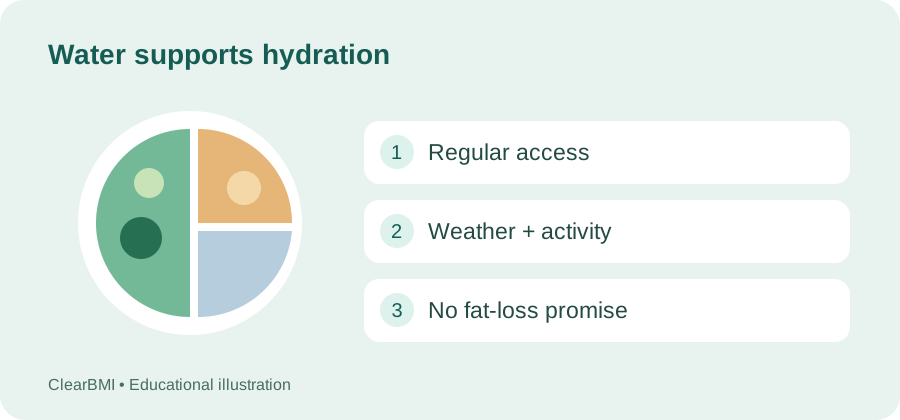
If you usually drink a sugar-sweetened beverage with lunch, choosing water changes that meal’s beverage intake. This is different from adding extra water while keeping every other habit the same and expecting weight loss. Use thirst, conditions and personal medical advice to guide drinking rather than forcing a large universal target. People with prescribed fluid restrictions should follow their clinician’s plan. A hot day or active commute may require more attention to fluid access. Water supports normal function; it is not a treatment for unexplained fatigue or a substitute for food.
Keep reading: