Dietary fat has had a complicated reputation over the decades, swinging from "avoid entirely" to a more nuanced modern understanding: the type of fat matters considerably more than the total amount for most people.
Unsaturated fats: generally the most favorably viewed
Unsaturated fats are typically liquid at room temperature and are further divided into monounsaturated and polyunsaturated fats.
Monounsaturated fats
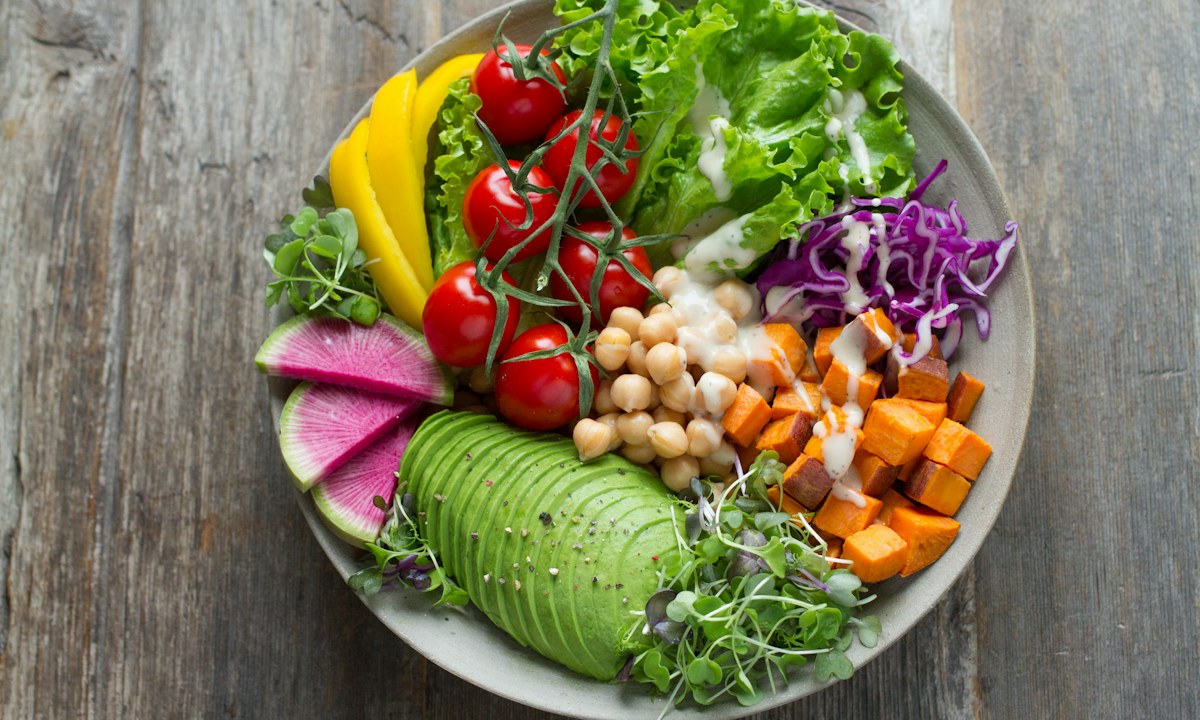
Found in olive oil, avocados, and many nuts (almonds, cashews, pecans). Widely associated with favorable cardiovascular health markers in research, and a defining feature of dietary patterns like the Mediterranean diet, frequently studied for long-term health outcomes.
Polyunsaturated fats
Includes omega-3 and omega-6 fatty acids, both considered essential — meaning the body can't produce them and they must come from food. Found in fatty fish (salmon, mackerel, sardines), walnuts, flaxseed, and various plant oils. Omega-3s in particular have been studied extensively for their association with cardiovascular and brain health.
Saturated fat: consider what replaces it
Saturated fat is found in foods such as butter, fatty meat and coconut oil. WHO guidance favors replacing saturated fats with unsaturated sources and limiting industrial trans fats. The replacement matters: adding oil to an unchanged meal is different from using it instead of butter. Consider the overall eating pattern and any individual clinical advice.
Trans fat: the one type with a clear consensus
Artificial trans fats, historically created through a process called partial hydrogenation to extend shelf life in processed foods (margarine, some baked goods, fried fast food), are consistently and strongly associated with negative cardiovascular outcomes, with essentially no nutritional upside. Many countries have banned or heavily restricted artificial trans fats in food manufacturing as a result. Checking ingredient lists for "partially hydrogenated oil" — even on products claiming "0g trans fat," due to labeling thresholds — is a reasonable practical step.
Why fat shouldn't be eliminated from your diet
Beyond energy, dietary fat is necessary for absorbing fat-soluble vitamins (A, D, E, K), supports hormone production, and contributes to satiety after a meal. Individual fat intake should fit overall energy and nutrient needs; a medically prescribed diet requires individual guidance.
A practical, non-obsessive approach
- Favor unsaturated sources where convenient — olive oil for cooking, nuts and seeds as snacks, fatty fish a couple of times a week
- Moderate rather than eliminate saturated fat sources
- Minimize artificial trans fat by checking labels on processed and fried foods
- Don't fear fat in whole foods (avocado, nuts, olive oil, fatty fish) — these are consistently associated with positive health outcomes in research
Putting it in context
Fat is one of the three macronutrients covered in our macronutrients overview, and like carbohydrates, quality and source matter more than simply minimizing the total amount for most people without a specific medical reason to restrict fat intake.
This article is educational and general in nature. If you have a specific condition affecting fat metabolism or cardiovascular health, follow guidance from your doctor.
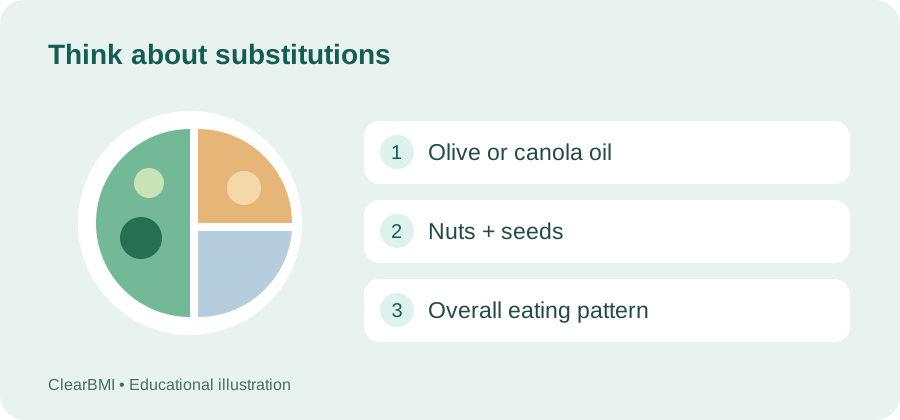
A substitution matters more than a slogan
When comparing two cooking habits, specify what replaces what. Using an unsaturated oil in place of some butter is a different change from simply adding oil to a meal already prepared with butter. Nuts, seeds and oily fish also supply different nutrients beyond fat. Keep allergies, affordability and the rest of the diet in view. Avoid interpreting a “healthy fat” label as permission to ignore portions or interpreting a food containing saturated fat as automatically forbidden. A dietitian can help translate general guidance into an appropriate eating pattern.
Keep reading: