
Sugar reduction advice is everywhere, but a lot of it skips a fairly important detail: not all sugar in your diet comes from the same place, and the distinction matters for how you actually approach cutting back.
Added sugar vs. naturally occurring sugar
Naturally occurring sugar is present in whole foods like fruit (fructose) and dairy (lactose) without anything added during processing. Added sugar is sugar and syrups introduced during food processing or preparation — in a soda, a flavored yogurt, a granola bar, or a homemade recipe. Modern nutrition labels in many countries now list these separately (see our nutrition label guide), specifically because research links high added sugar intake, more than naturally occurring sugar, with various health concerns.
Why the distinction matters
Whole foods containing natural sugar (like an apple) also come packaged with fiber, water, and micronutrients that moderate how quickly that sugar is absorbed and provide additional nutritional value. Added sugar, especially in beverages and highly processed snacks, typically arrives without any of that supporting structure — which is part of why it's more strongly associated with excess calorie intake and blood sugar spikes.
The many names added sugar goes by on ingredient labels
Manufacturers use a wide variety of terms for added sugar, which can make it harder to spot at a glance:
- High-fructose corn syrup, corn syrup
- Cane sugar, cane juice, evaporated cane juice
- Dextrose, sucrose, glucose, maltose
- Honey, agave nectar, maple syrup (natural in origin, but still counted as added sugar when added to a product)
- Fruit juice concentrate
Checking the "added sugars" line specifically on nutrition labels sidesteps the need to recognize every alternate name individually — it's already been calculated for you.
Where added sugar most commonly hides
Sugary drinks and desserts are the obvious sources, but added sugar shows up in less expected places too: pasta sauce, bread, salad dressing, flavored yogurt, granola, and many "healthy-sounding" snack bars. These smaller, less obvious sources often add up to more total sugar than the obvious ones like soda or candy.
Practical ways to reduce added sugar without an all-or-nothing approach
- Start with beverages — sugary drinks are typically the single largest source of added sugar in most diets and are often the easiest to reduce first, since they add little to fullness or nutrition relative to their sugar content.
- Compare similar products — pasta sauces, granola, and yogurt vary enormously in added sugar between brands; a quick label check can identify a lower-sugar option with a similar taste.
- Add natural sweetness instead of removing all sweetness — fresh or dried fruit in plain yogurt or oatmeal often satisfies a sweetness craving with less added sugar and more fiber than a pre-sweetened version.
- Reduce gradually — taste preference for sweetness adjusts over weeks; a gradual reduction tends to feel more sustainable than an abrupt cutoff.
General recommended limits
Commonly cited guidelines suggest keeping added sugar to no more than about 10% of total daily calories, with some health organizations recommending even lower amounts for additional benefit. These are general population guidelines rather than precise individual targets.
The bigger picture
Reducing added sugar doesn't require eliminating sweetness from your diet entirely — it's more about shifting where that sweetness comes from, and being aware of the less obvious sources hiding in savory-seeming packaged foods.
This article is educational and general in nature, not personalized dietary advice.
Compare two yogurt options fairly
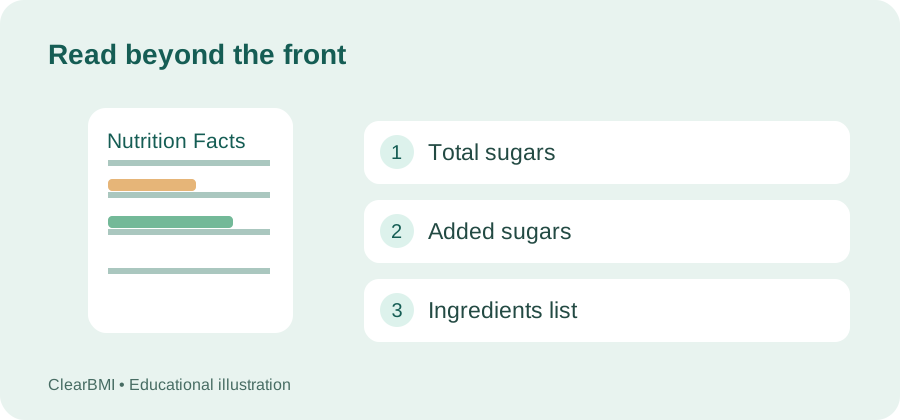
A plain yogurt can contain naturally occurring milk sugar. A flavored yogurt may contain that sugar plus added sweeteners. On a U.S. label, use the added-sugars line to distinguish the two rather than assuming all sugar is added. Match the serving sizes before comparing. If your local label does not separate added sugars, the ingredient list can identify sweeteners, although it may not reveal their exact quantities. You can choose plain yogurt and add fruit if you enjoy it; the aim is an informed choice, not a rule that every sweet food is forbidden.
Keep reading: