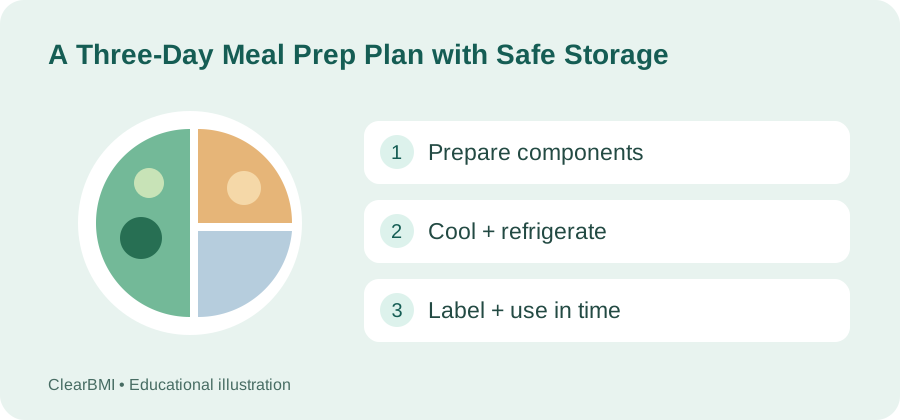
Meal prep works best when it makes the next few days easier. Preparing seven identical containers is not necessary, and a full week of refrigerated leftovers is not a safe assumption. A three-day plan is a more manageable experiment: you can learn what you like, how much you need and whether the storage arrangements work.
Choose components that mix well
Select one base, such as rice or another grain; a protein option, such as beans, tofu or cooked chicken; and two vegetables. Add a dressing or seasoning that can be stored separately. This gives you a small set of components that can become a bowl, a warm plate or a meal with a different side.
Decide how many people you are feeding before cooking. Follow the recipe or package instructions for quantities rather than treating this plan as a portion prescription. If you are trying an unfamiliar dish, prepare a small batch first so the experiment does not create a refrigerator full of unwanted meals.
A flexible three-lunch example
| Day | Lunch idea | Pack separately |
|---|---|---|
| One | Grain bowl with beans and vegetables | Dressing and crunchy toppings |
| Two | Warm grain-and-protein plate with cooked vegetables | A fresh side prepared that day |
| Three | Remaining components with a different seasoning | Any ingredient that becomes soggy when mixed |
These are combinations, not a guarantee that every possible ingredient will keep for the same length of time. Follow ingredient-specific storage guidance and package dates. If a component has a shorter safe storage window, use it first or choose a different ingredient.
Make food safety part of the plan
The FoodSafety.gov cold-storage chart lists three to four refrigerated days for many cooked leftovers, with the refrigerator at 40°F (4°C) or below. Refrigerate perishable food promptly, use shallow containers for cooling and do not wait for a large pot to sit at room temperature for hours. Freeze portions you will not use within the appropriate storage window.
Label each container with the preparation date and contents. Keep raw ingredients separate from ready-to-eat food. If you are transporting lunch, use a refrigerator at the destination or an insulated bag with adequate cold packs. Planning a safe cold chain matters as much as choosing the recipe.
Food can be unsafe without smelling unusual. Do not use a sniff test as permission to ignore storage time or temperature. When reheating leftovers, follow authoritative guidance for the dish; commonly recommended reheating temperature is 165°F (74°C), checked with a food thermometer. Local guidance may provide additional precautions, particularly for cooked rice.
Use a preparation order that reduces clutter
Start the component that takes longest to cook, then wash and prepare vegetables. While food cooks, clear the work surface and set out clean containers. Keep any raw meat preparation separate, wash hands and equipment as needed, and assemble only after the components are ready. Avoid making food safety harder by crowding every task into the same small space.
Review before repeating
After three lunches, note what you finished, what became less enjoyable and how transport worked. Perhaps a dressing needed its own container, or you cooked too much grain. Change one detail next time. You may prefer prepping vegetables and a protein food while cooking the base fresh. That is still meal prep if it makes the next meal easier.
If you cannot maintain safe refrigeration, choose a different plan. A convenient routine must work with the actual equipment available, not the kitchen you wish you had.
Keep reading: