A useful grocery list starts with the meals you can realistically cook, the food you already have and the storage space available. It does not start with a list of expensive “superfoods.” Prices vary by location and season, so this guide uses flexible categories rather than promising a universal weekly cost.
Check the kitchen before the shop
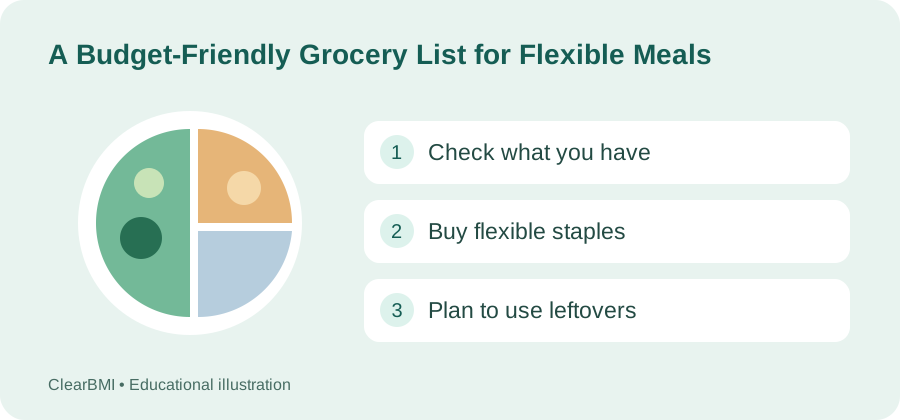
Look for ingredients that need using soon and note what is already in the freezer or cupboard. Half a bag of rice, eggs and a few carrots may already be the basis of a meal. Write those ingredients at the top of your plan so you do not buy duplicates while overlooking food you paid for last week.
Next, choose two or three main meals. Consider time as part of the budget: a cheap ingredient that needs hours of preparation may be unsuitable on a week of late shifts. Convenience can have practical value, especially if it prevents a purchase from going unused.
A reusable list with room for substitutions
| Category | Possible choices | How to use them |
|---|---|---|
| Grain or starch | Oats, rice, potatoes, bread | Breakfasts, bowls, soups or side dishes |
| Protein foods | Beans, lentils, eggs, tofu, canned fish | Change the meal’s main ingredient without changing the whole recipe |
| Vegetables | Seasonal fresh produce, frozen vegetables, canned tomatoes | Use delicate fresh items first; keep longer-lasting options for later |
| Fruit | Seasonal fruit or suitable frozen options | Add to breakfast or serve with a meal |
| Flavor | Oil, spices, lemon, vinegar or familiar sauces | Make the same basic ingredients work in different combinations |
Turn one basket into three different meals
For an illustrative basket of rice, beans, eggs, carrots, cabbage and canned tomatoes, plan a bean-and-tomato rice bowl, an egg-and-vegetable rice dish and a bean-and-cabbage soup. The ingredients overlap, but the meals need not taste identical. Use seasonings you already own and enjoy instead of buying a new spice for every recipe.
Do not assume that buying all these items is the cheapest choice in your area. Replace eggs with tofu, cabbage with frozen greens or rice with potatoes when price, availability or preference makes that more sensible. An adaptable pattern is more useful than a fixed basket.
Compare usable value, not just package size
Unit price helps compare equivalent products, but waste matters too. A large bag is only a bargain if you can use or store the contents. If you cannot finish fresh vegetables, a smaller pack or a frozen option may offer better value. Compare drained weight for canned foods when appropriate, and remember that preparation time, cooking fuel and storage containers can affect the practical cost.
Choose lower-sodium canned options when they are affordable and suitable; check the label rather than assuming every canned food has the same composition. Allergens and medical needs may narrow your options, and that is a legitimate reason to choose a different product.
A short planning routine you can repeat
Write three meal names, circle ingredients already available, then group the missing items by store section. Add one quick backup meal made mostly from pantry or freezer ingredients. Decide which fresh items to eat first and when you will cook. Leave some flexibility for changed plans rather than allocating every ingredient to a rigid timetable.
After the week, check what remained unused. Buy less of it next time or choose a different format. This feedback is more useful than trying to copy someone else’s exact spending total. The best list is the one that matches your kitchen, schedule and appetite.
Keep reading: