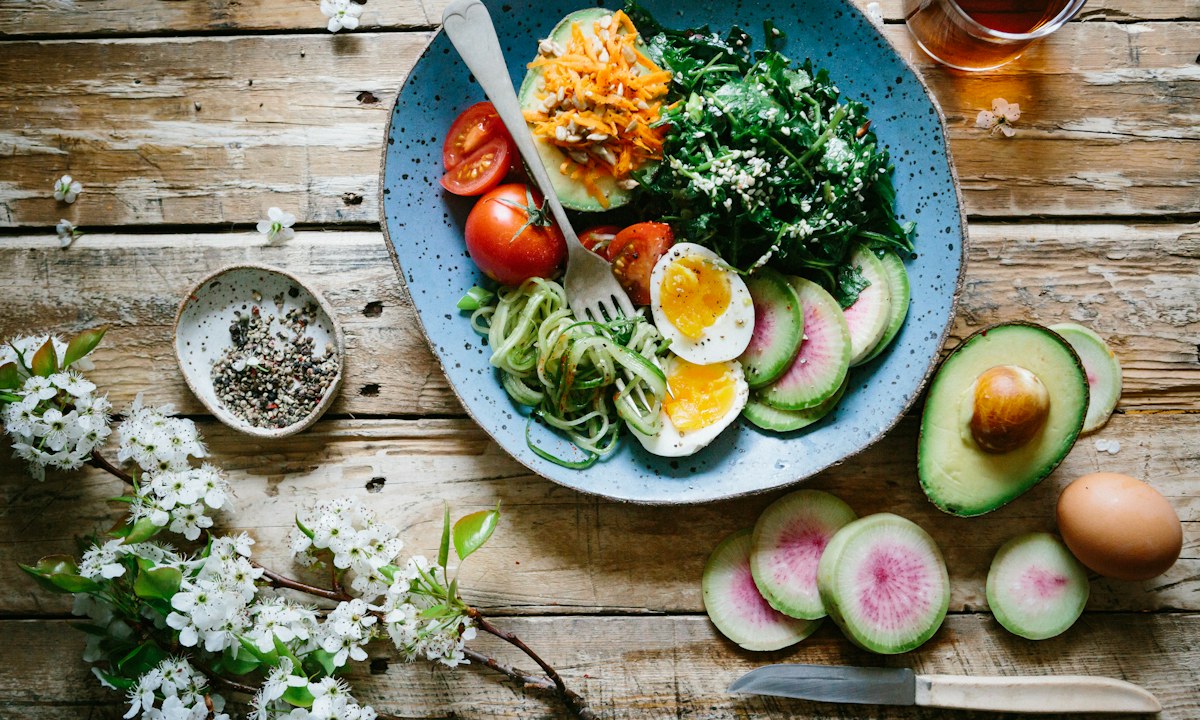
Much of everyday healthy eating advice can be boiled down to a single visual habit that public health agencies in several countries have independently converged on: divide your plate into sections, rather than tracking individual numbers.
The basic division
- Half the plate — vegetables and fruit. A mix of colors and types, prioritizing vegetables somewhat more heavily than fruit for most meals.
- One quarter — protein. Meat, fish, poultry, eggs, tofu, beans, or lentils (see our macronutrients guide for more on protein sources).
- One quarter — carbohydrates, ideally whole-grain where practical. Rice, potatoes, pasta, bread, or other starches.
Fat isn't given its own quarter in this model since it's typically incorporated throughout — in cooking oil, dressings, or naturally within the protein and other components — rather than eaten as a standalone portion.
Why this method works without counting anything
This visual approach naturally leads to a reasonably balanced macronutrient mix (see our macronutrients overview) and a substantial vegetable intake, without requiring calorie counting, gram measurements, or a nutrition app. It's flexible enough to apply to virtually any cuisine or meal style, from a stir-fry to a sandwich plate to a bowl-style meal.
Adapting it to different meal types
Bowls (grain bowls, poke bowls, burrito bowls)
The same half-quarter-quarter ratio applies even when ingredients are mixed together rather than kept in separate sections — just estimate the overall proportion of vegetables, protein, and carb base within the bowl.
Sandwiches and wraps
Harder to divide visually, but the same principle applies: load up on vegetables within or alongside the sandwich, choose a reasonable protein portion, and treat the bread as the carbohydrate quarter.
Soups and stews
Look at the ratio of solid ingredients rather than the plate itself — a good soup or stew typically has generous vegetables, a moderate amount of protein, and a modest amount of starch (rice, noodles, or potatoes) mixed throughout.
What this method doesn't address directly
This is a framework for meal composition, not a complete nutrition system — it doesn't directly address total calorie intake, specific nutrient targets, or portion sizes within each section (our portion size guide covers that separately). It's best understood as a starting structure rather than a complete plan.
Why it's a good default for most people
Unlike calorie counting or macro tracking, this method requires no tools, no app, and no numbers — it's something you can apply by eye at a restaurant, at home, or at someone else's dinner table equally well. For most people without a specific medical or performance reason to track more precisely, it covers the majority of what matters in day-to-day eating.
Putting it into practice
At your next meal, before eating, take a quick visual read of the proportions on your plate against this half-quarter-quarter guide. Over a couple of weeks, this becomes an automatic mental habit rather than something you have to consciously check every time.
This article is educational and general in nature, not personalized dietary advice.
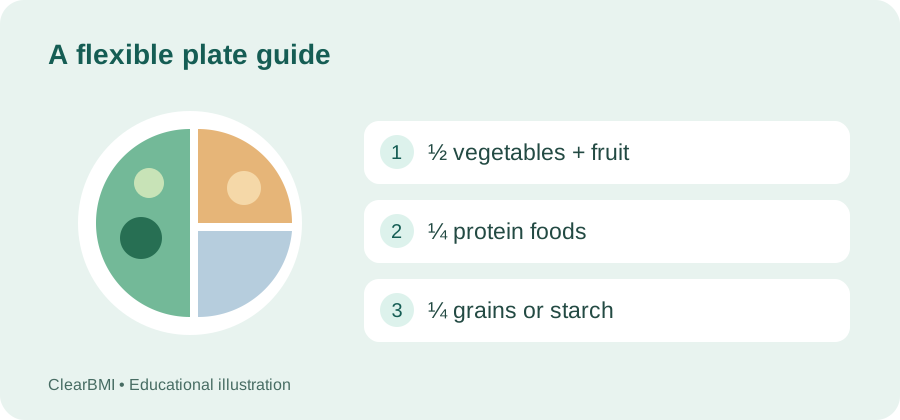
Apply the plate idea to a rice bowl
Start with rice as one component rather than the entire bowl. Add tofu, eggs, beans or another protein food, then build out the meal with cooked greens, carrots, cucumber or other vegetables you enjoy. The visual proportions are approximate; a growing teenager, endurance athlete or someone with a medical diet may need a different plan. For a mixed dish, consider its ingredients rather than trying to separate every bite. Keep sauces and seasonings that make the food enjoyable, and adapt quantities to appetite and individual needs.
Keep reading: