
Sleep tends to be treated as separate from "health habits" like diet and exercise, but a substantial body of research shows it directly influences the hormones and behaviors that drive both appetite and weight regulation.
The hormonal mechanism: ghrelin and leptin
Sleep deprivation has been shown in research to increase ghrelin (a hormone that stimulates appetite) and decrease leptin (a hormone that signals fullness). The combined effect is a measurable increase in hunger and appetite, particularly for calorie-dense, high-carbohydrate foods, following insufficient sleep — not a matter of willpower, but a hormonal shift that makes those choices genuinely harder to resist.
Poor sleep affects decision-making, not just hunger
Beyond the hormonal effect, sleep deprivation impairs the prefrontal cortex functions involved in planning and impulse control, which plausibly explains why tired decision-making so often defaults to convenient, less considered food choices rather than more deliberate ones — a pattern many people recognize anecdotally that research broadly supports.
Sleep and physical activity are connected too
Poor sleep is consistently associated with reduced motivation and capacity for physical activity the following day, creating a cycle where insufficient sleep both increases appetite and decreases the exercise that might otherwise help offset it.
How much sleep is generally recommended
Widely cited guidelines for most adults recommend 7-9 hours per night, though individual needs vary somewhat. Consistently sleeping below this range is where the appetite and decision-making effects described above become most pronounced in research.
Practical steps for improving sleep quality
- Consistent sleep and wake times — even on weekends — helps regulate the body's internal clock more effectively than variable timing.
- Limit screens before bed — both the light exposure and the mentally stimulating content can delay the onset of sleep for many people.
- Watch caffeine timing — caffeine's effects can last 6+ hours for some people, meaning an afternoon coffee can meaningfully disrupt sleep onset later that night without the person necessarily connecting the two.
- Keep the bedroom cool, dark, and quiet — environmental factors have a genuine, well-supported effect on sleep quality.
- Limit alcohol close to bedtime — alcohol can help you fall asleep faster but is associated with more fragmented, lower-quality sleep later in the night.
The stress connection
Sleep and stress influence each other in both directions — poor sleep increases stress reactivity, and elevated stress makes quality sleep harder to achieve. Our guide on stress and weight gain covers the related role of cortisol in more depth.
Why this matters alongside diet and exercise
Sleep isn't a replacement for the nutrition and activity habits covered elsewhere on this blog, but it's a meaningful multiplier — insufficient sleep makes healthy eating and consistent exercise measurably harder to sustain, through mechanisms that have nothing to do with motivation or discipline. Treating sleep as a foundational habit, rather than an afterthought, tends to make everything else easier to maintain.
A reasonable starting point
If sleep has been consistently short or poor quality, addressing that directly — before or alongside other changes — is a reasonable priority, given how much it influences the hormones and decision-making involved in the other habits covered throughout this blog.
This article is educational and general. If you have persistent sleep difficulties, consider speaking with a doctor, as underlying conditions like sleep apnea are treatable and worth ruling out.
Keep a short sleep record
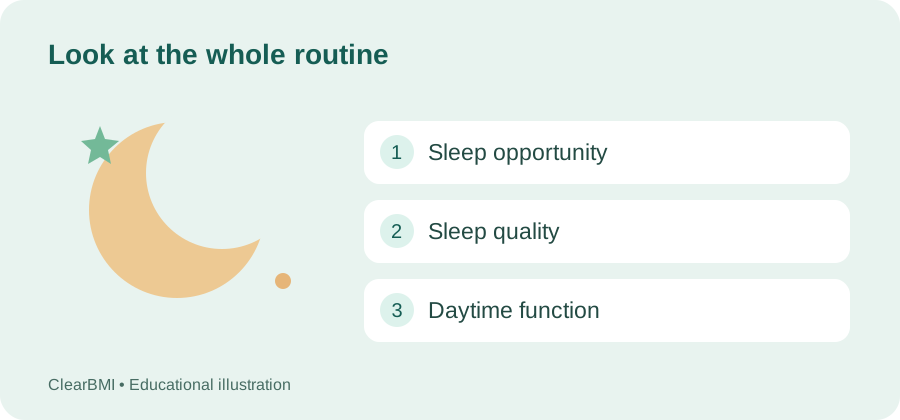
For a week, note your approximate bedtime, wake time, nighttime awakenings and daytime sleepiness. Add context such as late caffeine or shift work without trying to assign every poor night a single cause. This record can help identify a practical change and gives a clinician more useful information than a wearable score alone. Persistent snoring, breathing pauses or excessive daytime sleepiness should be assessed. Improving sleep can support wellbeing and daily routines, but it does not guarantee a particular weight change or replace treatment for a sleep disorder.
Keep reading: