
Stress can disrupt meals, sleep and daily movement. Some people eat more during stressful periods, while others lose their appetite. A change in weight cannot tell you which pathway is involved, and it does not establish that cortisol is unusually high. This guide focuses on practical observations rather than diagnosing a hormone problem.
Weight has more than one influence
NIDDK describes several influences on weight, including daily habits, sleep, medicines, medical conditions and genetics. Long-term stress can be part of that picture. Avoid turning one contributing factor into an explanation for every person or every change.
For example, a new work schedule may affect shopping, meal times, opportunities for movement and sleep simultaneously. Writing down those changes provides a more useful starting point than deciding that one hormone must explain the result.
Cortisol is not a home diagnosis
Cortisol is involved in normal body functions and the stress response. Feeling stressed, craving a food or noticing a change in waist size does not measure a cortisol level. If symptoms suggest a medical issue, evaluation belongs with a clinician. Products advertised as “cortisol blockers” should not be treated as a solution based on a self-diagnosis.
Identify the part of the routine that became harder
- Are meals being missed because there is no time or food available?
- Has sleep become irregular?
- Did you lose access to your usual movement routine?
- Has medication changed, or are there other symptoms?
- Is practical or emotional support available?
Choose one question that fits your situation. You might prepare an easy backup lunch, move a task to a less crowded time or ask for help with a household responsibility. The right change should reduce pressure, not create a demanding new regimen.
Use movement and rest in a manageable way
A comfortable walk or another activity you enjoy can provide a break in the day. General activity guidance is a reference, not a demand to begin an intense routine while overwhelmed. Similarly, the sleep guide offers points to consider, but persistent sleep problems may require care.
Some people find a quiet pause, breathing practice or conversation helpful. Preferences differ; no single method should be presented as a guaranteed hormone correction or a guaranteed way to change weight.
Know when general advice is insufficient
Persistent distress, unexplained weight changes or symptoms that affect everyday functioning deserve professional support. If a medicine might be involved, talk to the prescriber rather than stopping it yourself. Eating concerns also deserve support, especially if stress is leading to cycles of restriction or loss of control.
Keep the focus on what changed and what help would make the next day easier. Weight is one observation, not a judgment about how well you are coping.
Look for a practical pressure point
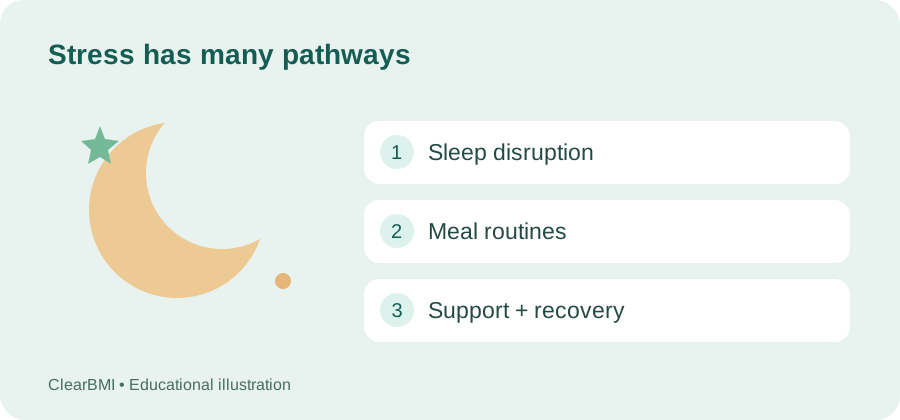
During a stressful week, lunch may be delayed, grocery shopping may fall through and sleep may become irregular. Those are specific problems you can address without assuming a hormone diagnosis. Keep one easy meal available, identify a manageable bedtime routine or ask someone for practical help. A change in weight does not prove that cortisol is unusually high, and a supplement cannot be recommended from that assumption. Persistent distress or unexplained weight change deserves professional support. Focus on the part of the routine you can make easier today.
Keep reading: