
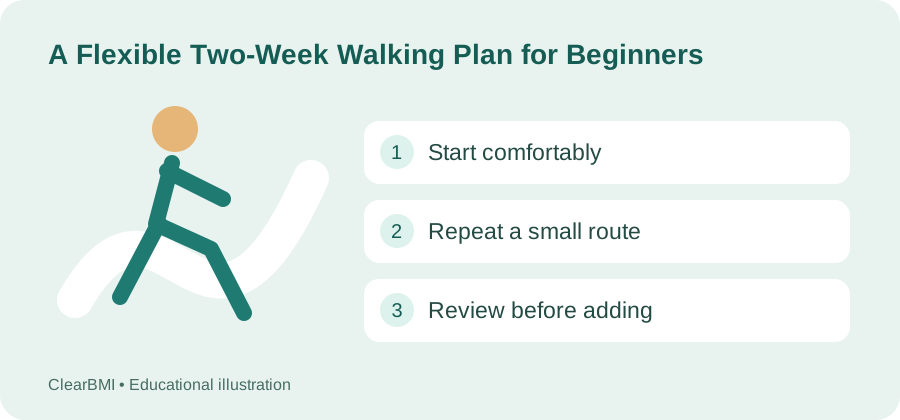
If you have been inactive, a large step-count goal can make starting feel unnecessarily difficult. A short familiar route and a repeatable time may be more useful. This two-week example helps you organize the habit; it is not a treatment plan or a promise of weight loss. Change the durations or activity to fit your capacity.
Choose a starting point you can manage
Think about a duration you can currently complete comfortably. For some people, that may be a few minutes; others may prefer longer. Choose a safe route with a clear turnaround point and consider crossings, lighting, weather and places to rest. Comfortable shoes and access to water when needed make the outing easier.
If you have symptoms, a recent injury or a condition affecting activity, get individualized guidance. Stop if you develop chest pain, dizziness or unusual breathlessness, and seek appropriate care. A general internet schedule cannot determine why those symptoms are happening.
An example, with permission to make it smaller
| Period | Example sessions | Busy-day alternative |
|---|---|---|
| Week one | Three walks of about 5–10 minutes | A shorter version of the same route |
| Week two | Repeat week one; add a few minutes to one walk only if comfortable | Keep the original duration or choose an accessible indoor option |
| End of week two | Review comfort, attendance and route suitability | Change one obstacle before adding more |
You can spread sessions differently, walk with a companion or use another accessible form of movement. There is no failure in repeating week one. If the routine is already challenging, make it smaller. Adding duration is optional; building a reliable starting habit is the immediate aim.
Use a cue that happens anyway
Link the walk to a regular event, such as putting away lunch dishes or arriving home from work. Write the plan in one sentence: “After lunch on Monday, Wednesday and Friday, I will walk the short route.” Keep shoes or other needed items somewhere easy to reach.
If the chosen cue frequently disappears, change it. An unpredictable lunch break may be a poor anchor, while a morning household routine may work better. Planning around your actual day is more effective than insisting on a time that repeatedly conflicts with responsibilities.
Decide on the backup before bad weather arrives
For unsafe heat, storms or poor visibility, choose a safe indoor option or postpone. You might use an accessible indoor corridor, walk in place if suitable, or do another movement you can manage. The backup does not need to match the original walk exactly. Safety and comfort come before maintaining a streak.
For a very busy day, take the shorter route or resume at the next planned opportunity. Do not double the next walk as punishment for missing one. The record should help you understand the routine, not create a debt you must repay.
Track information that helps you adjust
Write down approximate duration and a simple description: comfortable, harder than expected or interrupted by a practical obstacle. You do not need to estimate calories burned. At the end of each week, ask which time worked, whether the route felt safe and how you felt afterward.
WHO’s guidance places walking within the broader benefits of regular physical activity. A beginner routine is a starting point toward a pattern that suits you; it does not have to reach every guideline immediately. If you want to increase activity, change one thing at a time and reassess before increasing again.
Keep reading: