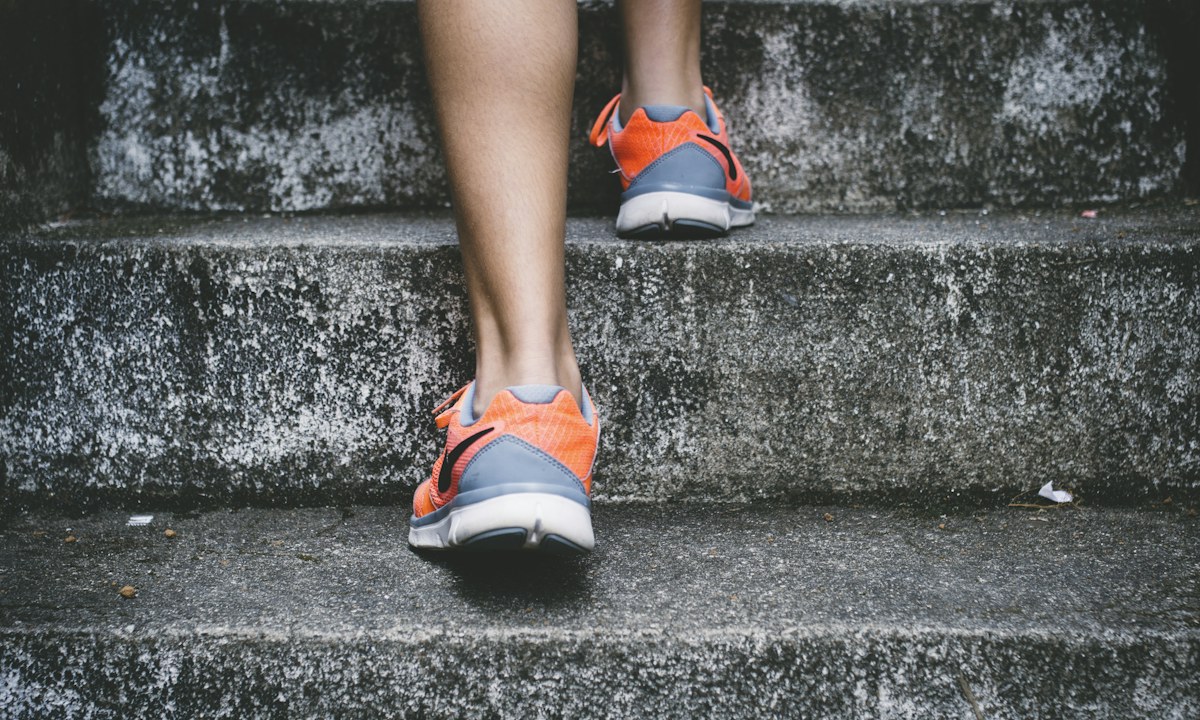
Walking doesn't have the intensity or drama of a hard gym session, which is probably exactly why it's so underrated — but its accessibility and sustainability make it one of the more practically useful tools for long-term weight management.
Why walking works for weight management
Walking burns calories, contributing to the overall energy balance relevant to weight, but its real advantage is sustainability: because it's low-impact and low-effort relative to other forms of exercise, it's far easier to maintain consistently over months and years — and consistency, more than intensity, tends to drive long-term outcomes.
Non-exercise activity adds up more than people expect
Researchers use a term — NEAT (non-exercise activity thermogenesis) — to describe the energy expended through everyday movement that isn't formal "exercise": walking to get somewhere, taking the stairs, general fidgeting and standing. For many people, especially those with largely sedentary jobs, increasing this kind of incidental movement can meaningfully affect total daily energy expenditure, sometimes more than a single dedicated workout session.
It fits into an already busy schedule
Unlike many forms of structured exercise, walking doesn't require a gym, special equipment, a change of clothes, or a shower afterward — which removes several common barriers that cause structured exercise plans to fall apart. A walking habit can be built directly into existing routines: a walking commute, a walk during a lunch break, or a phone call taken while walking instead of sitting.
Practical ways to add more walking
- Walking meetings or calls — for calls that don't require a screen, walking while talking is an easy way to add movement without setting aside separate time.
- Park farther away, or get off transit one stop early — small, low-effort additions that accumulate over a week.
- A short walk after meals — some research suggests a short walk after eating may help moderate the post-meal blood sugar response, in addition to the general activity benefit.
- Take the stairs by default — a small habit that adds up meaningfully over weeks and months.
- Set a step goal that fits your current baseline — a widely cited but not universally agreed-upon reference point is 7,000-10,000 steps per day, though the right target depends heavily on your starting point and circumstances; an improvement over your current average matters more than hitting a specific round number.
Walking alongside other exercise, not instead of it
Walking is a strong foundation, but it doesn't replace the muscle-strengthening benefits of resistance training (see our beginner's guide) or the higher cardiovascular demand of more vigorous activity. It pairs well as a base layer of daily movement alongside more structured exercise, as covered in our broader guide on weekly exercise guidelines.
Making it a genuine habit rather than a one-off effort
Attaching a walk to an existing daily routine (right after breakfast, right after arriving home from work) tends to build consistency more reliably than trying to find a "free" slot in an already busy day. Our guide on building a sustainable habit covers this approach in more depth.
Getting started
If you're not currently walking much, start with something genuinely easy to sustain — even 10-15 minutes a day — and build gradually rather than aiming for a large daily target immediately. The goal is a habit that survives a busy week, not a single impressive walk.
This article is educational and general. If you have joint issues or a condition affecting mobility, consult a doctor or physical therapist for guidance specific to your situation.
Plan for the difficult day
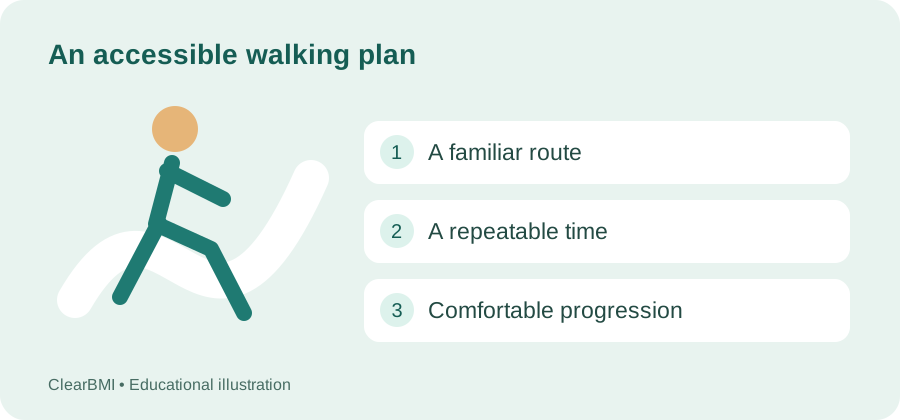
Choose a route close to home or work and a time linked to something you already do, such as finishing lunch. Decide on a shorter alternative for a busy day and an indoor option for unsafe weather. Start at a duration that feels manageable rather than a universal step target. Track the walk itself and your comfort afterward. Walking has value even when weight stays stable, and it should not be treated as compensation for eating. If pain, dizziness or unusual breathlessness occurs, stop and seek appropriate advice.
Keep reading: