
A rushed morning can make breakfast feel like one more decision you do not have time for. You do not need a perfect recipe or an exact calorie target. A small set of repeatable combinations can make the choice easier. This guide is a menu of options, not a rule that everybody must eat at the same time or eat the same amount.
Start with three building blocks
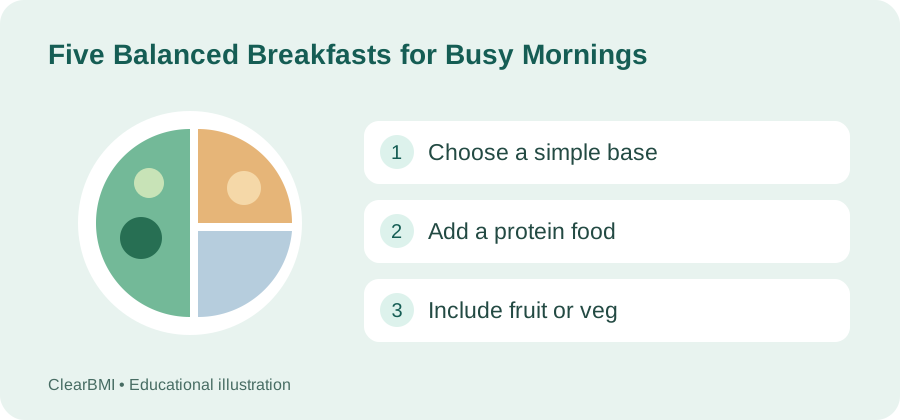
Choose a base you enjoy, such as oats, bread, rice or potatoes. Add a protein food such as eggs, yogurt, tofu or beans. Include fruit or vegetables when practical. Foods overlap: beans provide carbohydrate as well as protein, and yogurt contains more than protein alone. The building blocks help you assemble a meal rather than calculate a nutrient prescription.
Adjust the amount to your appetite, schedule and needs. Someone heading into a physically demanding shift may need a different breakfast from someone who prefers a small meal and an earlier lunch. Medical diets and food allergies take priority over these examples.
Five combinations to put on your rotation
| Combination | Preparation | Easy substitution |
|---|---|---|
| Oats, plain yogurt and banana | Cook oats or prepare refrigerated overnight oats | Use a suitable fortified soy alternative if dairy is unsuitable |
| Egg, toast and tomato | Cook the egg while the bread toasts | Use tofu or beans instead of egg |
| Rice, tofu and greens | Use safely stored cooked components | Swap rice for noodles or another grain |
| Bean toast with cucumber | Rinse canned beans and warm if desired | Use lentils or hummus if available |
| Yogurt, fruit and unsweetened cereal | Assemble immediately before eating | Choose ingredients that suit allergies and preferences |
A realistic example: oats without a complicated recipe
Put a serving of oats that suits your appetite into a bowl, cook according to the package instructions, and add plain yogurt and sliced banana. Add cinnamon or a small amount of nuts if you enjoy them and they are safe for you. If the meal leaves you hungry well before lunch, try a larger portion or another accompanying food next time. If it feels too large, scale it down. The feedback is about comfort and practicality, not whether you followed a universal bowl size.
For an overnight version, prepare oats with a suitable liquid in a covered container and refrigerate. Keep perishable ingredients cold during storage and transport. Do not leave a dairy-based breakfast on a desk for the whole morning.
Make the evening before do some of the work
Set out the bowl and dry ingredients, check that there is a protein option in the refrigerator, and choose tomorrow’s fruit. These small decisions reduce the number of steps needed when you are tired. If you travel to work early, identify where you can keep breakfast cold or choose an option that does not depend on a refrigerator.
Keep one backup combination that uses ingredients you usually have. Toast with beans may be more repeatable than a recipe requiring several fresh toppings. A modest breakfast you can actually prepare is more useful than a photograph of an elaborate meal that never fits your morning.
What if you do not like breakfast?
This guide does not require you to force a meal when you do not want one. Consider your overall eating routine, how you feel and any medication instructions that involve food. If skipping the morning meal regularly leaves you shaky, unwell or unable to concentrate, discuss that pattern with a healthcare professional. Persistent symptoms should not be solved by guessing from an article.
Your first-week experiment
Choose two combinations and buy only the missing ingredients. Try each on a normal workday. Note preparation time, whether the food travels well and whether you enjoy it enough to repeat it. Keep the easier option and adapt the other. The aim is to reduce friction while preserving variety, not to create another demanding morning project.
Keep reading: